Does a Fender Bender Count? Why Minor Accidents Still Need Medical Attention

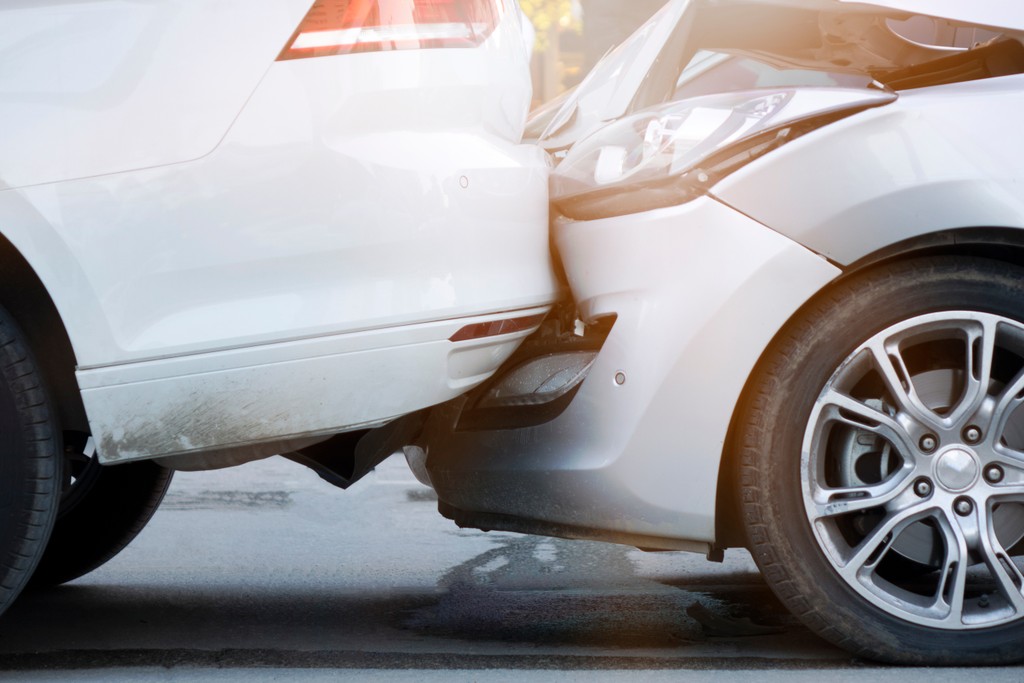
You were barely moving. The damage looks minor — a scuff on the bumper, maybe a cracked tail light. Everyone got out of their cars, looked at the contact point, and said the same thing: "It's just a fender bender. We're fine."
That phrase — "just a fender bender" — is one of the most medically misleading things said at accident scenes across South Florida every single day. And the consequences of believing it can follow you for months or years.
At County Line Chiropractic, we have treated more than 10,000 South Florida car accident patients since 1986. A significant number of them came to us days after a low-speed collision — the kind that left their car barely scratched — in serious pain that had developed gradually since the crash. Understanding why this happens is not just interesting science. It could protect your health and your rights.
Why ‘Minor’ Is the Wrong Word for Low-Speed Collisions
The word ‘minor’ implies small consequences. In the context of vehicle damage, it might be accurate — modern bumpers are engineered to absorb low-speed impacts and spring back to shape, minimizing visible damage. But that engineering is precisely what makes low-speed collisions deceptive from an injury standpoint.
When a bumper absorbs and returns the energy of a collision without permanently deforming, the energy has to go somewhere. A significant portion of it passes through the vehicle structure and into the occupants. The car looks fine. The people inside absorbed the energy.
Research in crash biomechanics has repeatedly demonstrated that there is no reliable relationship between the amount of visible vehicle damage and the severity of occupant injury. Biomechanical engineers use the term ‘low-velocity, high-risk’ to describe exactly this scenario: crashes where vehicle damage is minimal but the forces transmitted to occupants are sufficient to cause significant soft tissue and spinal injury.
What Happens to Your Body in a Low-Speed Crash
Even at 8 to 15 miles per hour — the speed range of most parking lot and stop-and-go traffic collisions — the biomechanical sequence inside the vehicle is significant:
• The struck vehicle accelerates forward under the force of impact
• The occupant’s torso, pressed against the seat back, accelerates with the vehicle
• The head, connected to the torso only through the cervical spine, momentarily lags behind due to inertia
• This differential creates rapid hyperextension of the neck — the head is thrown backward
• The vehicle then decelerates and the head whips forward in rapid flexion
• The entire sequence completes in less than 300 milliseconds — faster than the human blink reflex
Research has shown that cervical soft tissue injuries can occur at impact speeds as low as 5 miles per hour. The muscles, ligaments, tendons, and facet joint capsules of the neck are all vulnerable to this rapid acceleration-deceleration cycle — and none of these structures show on standard X-rays.
The Adrenaline Window — Why You Feel Fine Right After
Here is the biological reason that ‘I’m fine’ at the accident scene is not a reliable medical assessment.
The physical and emotional stress of a collision — even a minor one — triggers an immediate hormonal response. Your adrenal glands release epinephrine and cortisol, flooding the body with hormones that suppress pain signaling, heighten alertness, and prepare the body for action. This is the acute stress response, and it is extremely effective at what it does.
For hours after a fender bender, you may genuinely feel nothing — or only mild stiffness that seems trivial. The adrenaline is doing its job. But adrenaline does not heal injuries. It masks them. When the hormonal cascade fades, typically 12 to 48 hours after the crash, the inflammatory response that your body has been building reaches its peak — and the pain that was masked finally makes itself known.
The patient who drove themselves home from a parking lot collision feeling fine on Tuesday is often the patient who calls us Thursday morning, barely able to turn their head.
Feeling fine at the scene is a normal biological response to stress — not a medical assessment of your injuries.
The Injuries That Low-Speed Collisions Commonly Cause
Whiplash and Cervical Strain
The most common injury from low-speed rear-end collisions. Even without any fracture or obvious structural damage, the rapid hyperextension-hyperflexion cycle can tear or strain cervical ligaments, strain muscles, and irritate facet joints. Symptoms — neck pain, stiffness, headaches, shoulder pain — often don’t reach their full severity until 24 to 72 hours after impact. [LINK: /blog/top-5-car-accident-injuries]
Soft Tissue Damage
The muscles, tendons, and ligaments throughout the neck, upper back, and shoulders absorb significant force in low-speed collisions. These injuries are invisible on standard X-rays, frequently missed in emergency room evaluations, and among the most common sources of chronic post-accident pain when left untreated.
Disc Irritation and Early Herniation
Low-speed collisions can crack or stress intervertebral discs without producing immediate severe symptoms. A disc that was structurally compromised during impact may not begin producing nerve symptoms until inflammatory swelling develops around the affected level — sometimes days after the crash. What starts as mild stiffness can evolve into radiating arm or leg pain as the disc pathology progresses.
Headaches
Post-accident headaches — often originating from cervical joint irritation or upper cervical muscle spasm — are among the most consistently delayed symptoms after low-speed collisions. Many patients don’t connect the morning headaches that start two days after their fender bender to the accident itself, because they felt fine the day before.
Why the 14-Day Rule Makes This Urgent
Florida law requires you to seek medical treatment within 14 days of any car accident to access your Personal Injury Protection (PIP) benefits. There are no exceptions for ‘it didn’t seem that serious’ or ‘I thought I was fine.’ The 14-day clock starts at the moment of impact — not at the moment you start feeling pain.
This is exactly why fender benders are the most common scenario in which patients accidentally forfeit their PIP benefits. They feel okay, they assume nothing happened, they wait. By the time the pain arrives on day four or five, the urgency of the deadline hasn’t registered. And by day fifteen, the window is permanently closed.
Your PIP benefit — up to $10,000 for qualifying injuries — is available regardless of how minor the crash looked. The benefit is there because the law recognizes that even low-speed collisions cause real injuries that require real medical care. Use it.
What a Proper Evaluation Finds
When a fender bender patient comes to County Line Chiropractic, they often arrive skeptical — a little embarrassed, even, that they are there at all for what felt like a non-event. Our job is to find what happened, not to validate a preconception about severity.
Our post-accident evaluation includes:
• Detailed orthopedic examination of the cervical, thoracic, and lumbar spine
• Range of motion measurement — quantifying what you can and cannot do
• Neurological assessment — reflexes, sensation, muscle strength
• Soft tissue palpation — finding injury sites that imaging cannot locate
• Digital X-ray analysis focused on spinal alignment, not just fracture absence
• MRI referral coordination when disc or nerve involvement is clinically suspected
The findings often surprise patients who assumed nothing was wrong. And the documentation of those findings — regardless of how the crash looked at the scene — creates the clinical record that supports their recovery and, where relevant, their legal claim.
‘But the Other Driver’s Insurance Said It’s Not Worth a Claim’
This is a statement designed to protect the at-fault driver’s insurer, not to protect you. Under Florida’s no-fault PIP system, your own insurance covers your medical care regardless of the other driver’s assessment of what your injuries are worth. You do not need the other driver’s insurer to agree that you were hurt in order to seek care.
Come in. Get evaluated. Let the clinical findings determine the picture — not the opinion of an adjuster who was not at your accident and has not examined your spine.
The Bottom Line
There is no such thing as a completely ‘minor’ car accident when it comes to the human body. There are accidents with minimal visible vehicle damage — and those accidents can still transmit significant forces to the occupants, cause real soft tissue and spinal injuries, and produce pain that develops days after the crash.
If you have been in any car accident in Florida in the past 14 days — regardless of how it looked at the scene, regardless of how you felt afterward — you are entitled to a PIP-covered evaluation by a qualified provider. County Line Chiropractic has six South Florida locations, same-day walk-in availability, and 39 years of experience evaluating exactly these cases. We bill your PIP insurer directly. You bring your auto insurance information. We handle the rest.
📍 County Line Chiropractic has 6 locations across South Florida — Miami Gardens, North Miami Beach, Pembroke Pines, Plantation, Lauderhill, and Oakland Park. Walk-ins welcome. We bill your PIP insurer directly — bring your auto insurance information and we handle the rest. Call or schedule at countylinechiro.com.
This content is for educational purposes only and does not constitute medical, legal, or insurance advice. Individual PIP benefit amounts and coverage vary by policy. Consult a licensed attorney or insurance professional for guidance specific to your situation.